
For countless development teams, GitHub is simply part of the background — always on, handling repositories, issues, and pipelines without much thought. But that’s starting to change. Across Europe especially, more and more organizations are making a conscious decision to look elsewhere. Some are responding to GDPR obligations, others want their data to physically stay within EU borders, and still others are making a long-term strategic bet on reducing their exposure to American tech platforms. Since Microsoft acquired GitHub, that last concern has only grown louder. Add to that a thriving community of developers who actively want to support European open-source ecosystems, and it’s clear this isn’t a niche conversation anymore.
This guide covers the most compelling European alternatives to GitHub, helps you figure out which one actually fits your organization’s needs, and gives you a practical framework for making the move without throwing your team into chaos.
What’s Driving the Move Away from GitHub?
Before jumping into platform comparisons, it’s worth understanding the real motivations behind these migrations — because the right platform choice often depends on the specific problem you’re trying to solve.
- Data residency: many organizations need source code, CI artifacts, issue data, and logs to be physically stored inside the EU — not just contractually covered.
- GDPR and compliance requirements: working with EU-based providers makes data processing agreements and Data Protection Impact Assessments (DPIAs) significantly more straightforward.
- Vendor independence: after Microsoft’s acquisition of GitHub, a growing number of teams want to reduce their reliance on a single American platform and its surrounding ecosystem.
- Public sector and critical infrastructure: stricter digital sovereignty rules increasingly require demonstrable control over where data lives and how it’s processed.
- Values and community alignment: some developers simply want their infrastructure choices to reflect a commitment to European open-source communities and independent governance.
If one or more of these resonate with your situation, it’s genuinely worth exploring what’s out there — and there’s more than you might expect.
Defining Your Must-Haves Before You Evaluate Anything
Not every GitHub alternative needs to do everything GitHub does. What matters is whether it covers the things your team actually depends on day to day. Here’s a solid starting checklist to evaluate any platform against:
- Git repository management with proper support for branch protection, permissions, and tags
- Pull and merge request workflows including code review tools and automated status checks
- Issue tracking and project boards with labels, milestones, and issue templates
- CI/CD pipelines covering runner support, secrets management, and artifact storage
- Identity and access management via SSO, LDAP, or SAML, along with audit logging for compliance
- Integrations with tools your team already uses — like Slack, Microsoft Teams, Jira, container registries, and package registries
- Data portability through export options, API access, and backup capabilities
Use this list to build your own evaluation matrix before making any commitments. It will save you headaches down the road.
The Best European GitHub Alternatives Worth Considering
1) Forgejo — Independent, Community-Governed, and Purpose-Built for Sovereignty
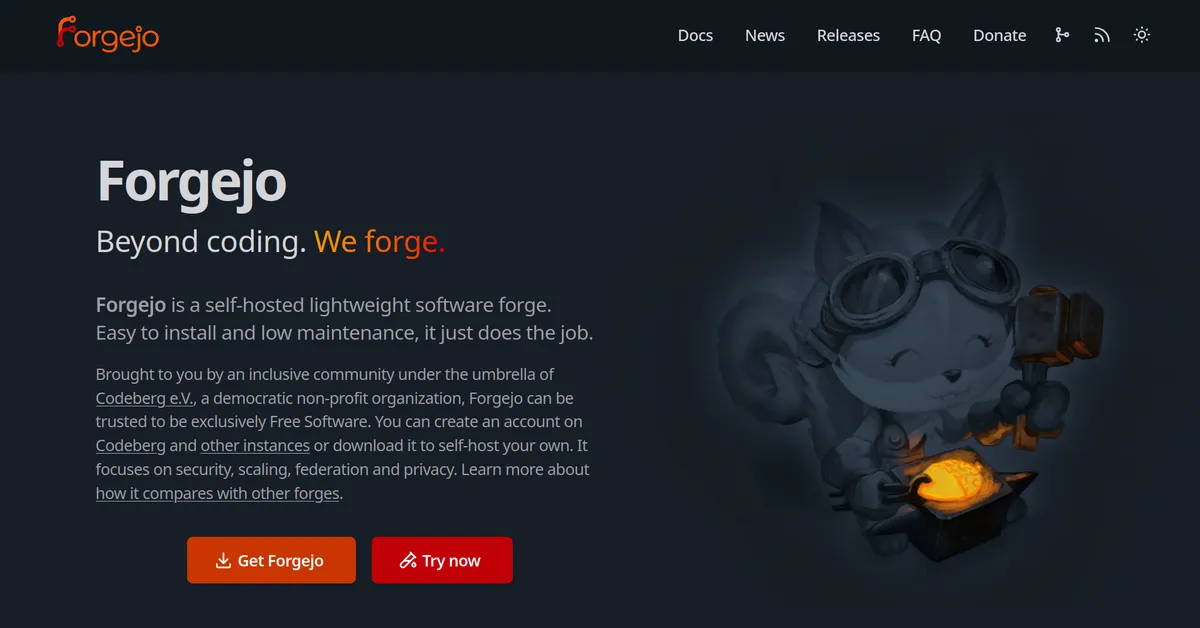
Forgejo emerged as a community fork of Gitea, created specifically to ensure that development decisions stayed in the hands of the community rather than commercial interests. That governance model — transparent, independent, and non-corporate — has made it a natural fit for conversations around digital sovereignty, particularly in public sector circles.
- Key strengths: clean, modern codebase; fully open governance; strong community ownership of the project’s direction.
- Worth noting: the range of available integrations and CI/CD features can vary depending on your hosting setup — verify specifics before committing.
- Best suited for: public institutions, NGOs, and teams where vendor neutrality is a core requirement rather than a nice-to-have.
2) SourceHut — Stripped Back, Fast, and Built for Serious Engineers
SourceHut isn’t trying to compete with GitHub on features — it’s doing something deliberately different. The platform ditches heavy visual interfaces in favor of speed and simplicity, with email-based workflows at its core rather than dashboards and boards. It’s a niche choice, no question, but for teams who find most platforms bloated and slow, it can feel like a revelation.
- Key strengths: exceptionally fast, minimal tooling, and a development philosophy that prioritizes clarity over convenience.
- Worth noting: the email-driven workflow is a fundamental shift from what most teams are used to — visual project management users will find the transition genuinely challenging.
- Best suited for: small, engineering-heavy teams, open-source maintainers, and developers who actively prefer simplicity over feature depth.
3) Codeberg — Managed Forgejo with a Strong European Identity

Codeberg is a fully hosted platform built on top of Forgejo, operated by a non-profit with an explicitly European and community-first identity. It has attracted a significant number of open-source projects that have made a deliberate choice to leave US-based hosting behind. Because it’s fully managed, there’s no infrastructure to worry about — you sign up and start using it. That simplicity is one of its strongest selling points.
- Key strengths: clear European identity, community-driven ethos, and the full Forgejo feature set available without any infrastructure overhead.
- Worth noting: formal SLAs and enterprise-grade support options are limited compared to commercial providers — something to factor in if you’re running mission-critical workloads.
- Best suited for: open-source projects and smaller organizations that want European hosting without the burden of running their own infrastructure.
Matching the Right Platform to Your Situation
- Looking for a lightweight solution focused on repositories and code review? → Forgejo is the natural first port of call.
- Running an open-source project and want a European community home without managing servers? → Codeberg is the logical fit.
- Want a fast, minimalist, email-first setup built for engineers who prefer the command line? → SourceHut deserves a serious look.
Where Migrations Actually Get Difficult
CI/CD: The Part That Almost Always Causes Problems
Moving Git repositories from one platform to another is usually the straightforward part. Where teams consistently run into real trouble is with CI/CD. Pipelines don’t port cleanly, secrets need to be reconfigured, runners need to be re-registered, and build artifacts require new storage setups. Before you start, take stock of:
- Which workflows are currently running via GitHub Actions — and how complex are they?
- What secrets and environment variables are defined, and where are they stored?
- Are you using self-hosted runners, cloud runners, or both — and what permissions do they need?
- Are there dependencies on Docker registries, package registries, or infrastructure-as-code tooling that will be affected?
Access Control and Identity Management
SSO configuration, role hierarchies, branch protection policies, and audit logging are compliance-critical in most organizations — and they’re easy to deprioritize when you’re focused on getting code across. Don’t leave them until the end. Test your SAML or SCIM setup early so that any compatibility issues surface while you still have time to resolve them calmly.
Bringing Along More Than Just Code
If you want to migrate issues, wiki pages, release notes, and pull request history alongside your repositories, careful planning is essential. Not all of this data maps cleanly to a new platform’s structure. The most practical approach is to decide upfront what you’re actively migrating versus what you’ll preserve as a read-only archive on the old platform.
A Six-Step Approach to a Smooth Migration
- Define the scope clearly: which repositories, teams, and integrations are in scope for the migration, and which aren’t?
- Choose your target platform with care: weigh functionality, operational overhead, and compliance requirements against each other — not just features.
- Start with a pilot: migrate one to three representative repositories, including their full CI/CD pipelines, and evaluate what works and what doesn’t before scaling up.
- Automate the repetitive parts: use scripts to handle repository mirroring, team setup, webhook configuration, and runner registration wherever possible.
- Roll out incrementally: migrate team by team or product by product, with clearly communicated freeze windows to prevent conflicts.
- Properly close out the old environment: archive legacy repositories, set up redirects, update internal documentation, and put monitoring and backup policies in place on the new platform before you consider the migration complete.
This Is a Strategic Decision as Much as a Technical One
It’s worth being clear-eyed about what a migration like this actually involves. Switching to a European GitHub alternative isn’t purely a tooling decision — compliance obligations, risk management, long-term vendor independence, and organizational values all play a role. Teams that want to stay lean and self-hosted will find Forgejo a strong match, while open-source projects looking for a European home without infrastructure overhead will feel right at home on Codeberg.
One piece of advice that applies regardless of which platform you choose: always run a pilot before attempting anything at scale. Don’t commit to a full migration until CI/CD pipelines, SSO, and backup processes are all demonstrably working on the new platform. The upfront investment is worth it every time.
If your interest in digital sovereignty goes beyond code hosting, it’s worth exploring top European alternatives to Microsoft and European alternatives to Google as well — because genuine independence from Big Tech platforms extends well beyond where you host your repositories.
Have questions about picking the right platform or putting together a migration plan — including CI/CD translation, SSO configuration, or governance setup? Drop a comment or get in touch, and we’re happy to think it through based on your specific stack and compliance requirements.